Blog
10 Best Email Deliverability Tools to Master Your Inbox Placement in 2026
Master email deliverability with our guide to the 10 best tools for 2026. Explore validation, testing, monitoring, and authentication solutions to boost your

> TL;DR: > Email deliverability tools are crucial for ensuring your marketing messages reach their intended recipients. This guide explores the 10 best tools in 2026, covering everything from pre-send validation and inbox placement testing to post-send monitoring and authentication analysis. Discover how Sendgrove's integrated platform simplifies this complex landscape, offering a comprehensive solution for mastering your email deliverability.
Email deliverability is the silent gatekeeper of your marketing success. It doesn't matter how compelling your subject line or how well-designed your email is if it never reaches the inbox. In 2026, mastering inbox placement requires more than just good content; it demands the right toolkit.
This article dives into the top 10 email deliverability tools available today, helping you navigate the complex world of email authentication, spam filters, and sender reputation. We’ll explore solutions ranging from pre-send verification to ongoing monitoring, and show how Sendgrove offers an integrated approach to keep your emails out of the spam folder and in front of your audience.
Last updated: August 2026
What is Email Deliverability and Why Does It Matter?
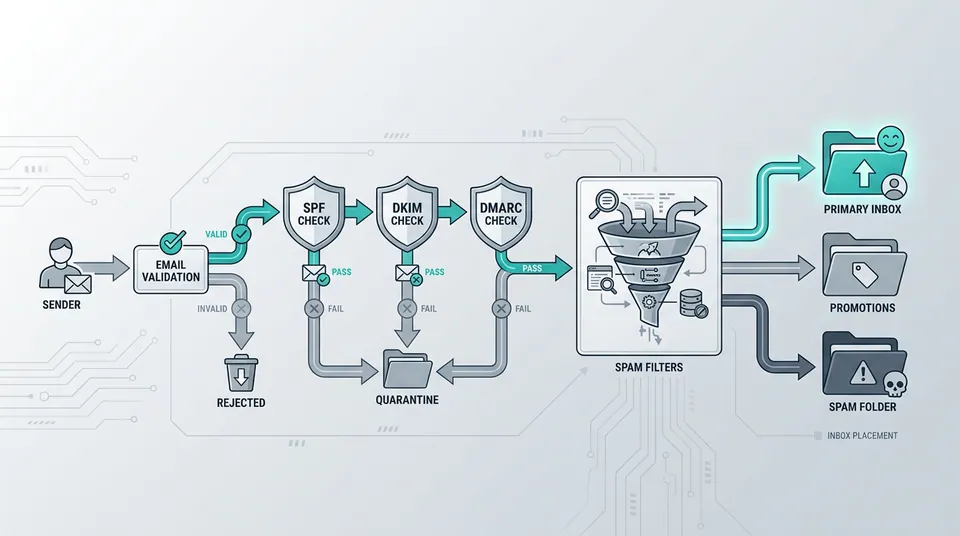
Email deliverability refers to the ability of an email to successfully reach a subscriber's inbox. It's often confused with email delivery, which simply means the email didn't hard bounce. Deliverability goes a step further, focusing on whether an email lands in the primary inbox, a promotions tab, or the dreaded spam folder.
A high deliverability rate is paramount for several reasons:
- Maximizing ROI: Every email that hits the spam folder is a lost opportunity for engagement, conversion, and revenue.
- Protecting Sender Reputation: Poor deliverability signals to ISPs (Internet Service Providers) that your emails are unwanted, leading to stricter filtering and even blacklisting.
- Accurate Campaign Analytics: If a significant portion of your emails aren't reaching the inbox, your open rates, click-through rates, and conversion metrics will be skewed, making it impossible to accurately assess campaign performance.
- Building Trust: Consistently landing in the inbox builds trust with your subscribers, reinforcing your brand's credibility.
In today's landscape, with ISPs constantly updating their filtering algorithms and strict sender requirements from giants like Google and Yahoo, relying on guesswork is a recipe for failure. That's where a robust set of email deliverability tools comes into play.
Essential Features of an Email Deliverability Tool

Effective email deliverability tools offer a range of functionalities designed to diagnose, prevent, and resolve inbox placement issues. When evaluating solutions, look for a combination of these core features:
- Email Validation and Verification: Pre-send checks to identify invalid, fake, temporary, or spam trap email addresses. This is foundational for maintaining a clean list and protecting your sender reputation.
- Inbox Placement Testing: Simulates sending your email to various email clients (Gmail, Outlook, Yahoo, etc.) and spam filters to predict where it will land.
- Spam Score Checking: Analyzes your email content, subject line, and sender details against known spam triggers to provide a "spam score" and suggestions for improvement.
- Blocklist Monitoring: Monitors major RBLs (Real-time Blackhole Lists) and DNSBLs (DNS-based Blackhole Lists) to alert you if your IP address or domain gets listed, which can severely impact deliverability.
- Authentication Monitoring (SPF, DKIM, DMARC): Checks the validity and configuration of your Sender Policy Framework (SPF), DomainKeys Identified Mail (DKIM), and Domain-based Message Authentication, Reporting & Conformance (DMARC) records, which are critical for proving your emails are legitimate.
- Sender Reputation Monitoring: Provides insights into your domain and IP reputation across various ISPs.
- Email Previews: Shows how your email renders across different email clients and devices, catching rendering issues before they reach subscribers.
- Deliverability Reporting and Analytics: Offers dashboards and reports that track key deliverability metrics over time, helping you spot trends and identify areas for improvement.
10 Best Email Deliverability Tools for Marketers
Here's our breakdown of the top email deliverability tools that can help you ensure your emails consistently reach the inbox.
1. Sendgrove: Integrated Email Marketing with Built-in Deliverability
Sendgrove stands out by offering a comprehensive email marketing platform with robust, built-in email validation and deliverability features. Instead of juggling multiple tools, marketers can manage campaigns, automate workflows, and ensure high deliverability from a single, unified dashboard.
Key Features:
- Real-time Email Validation: Automatically verifies email addresses at the point of entry (forms, imports) and for existing lists, reducing bounces and protecting sender reputation.
- Credit-based Validation: Efficiently manages validation costs, with 1 credit = 1 validation, offering transparent pricing. Free users get a generous allotment of free validations monthly (check our pricing page for details).
- Intuitive Email Marketing Automation: Create powerful customer journeys and automated sequences that are designed to reach the inbox.
- Advanced Segmentation: Target the right audience with precision, improving engagement and deliverability.
- Comprehensive Analytics: Track key email marketing and deliverability metrics from a single dashboard.
- Dedicated IP Options: For high-volume senders, dedicated IP addresses offer greater control over sender reputation.
Why it's #1: Sendgrove's integrated approach is a game-changer for marketers who want to simplify their tech stack without compromising on deliverability. By combining how to remove spam traps, automation, and validation into one platform, it streamlines operations and provides a holistic view of your email performance. The proactive how to keep emails out of spam features significantly reduce hard bounces and improve list hygiene, which are foundational to excellent deliverability.
2. Mailtrap: Email Testing & Deliverability Platform
Mailtrap offers a suite of tools for email testing and deliverability. It's particularly popular among developers for its email sandbox, which captures SMTP traffic without sending real emails, making it ideal for staging and development environments. They also provide an Inbox Placement Test and Blacklist Monitoring.
Key Features:
- Email Sandbox: Capture and inspect emails in development, preventing test emails from reaching real users.
- Inbox Placement Testing: Test how your emails perform across various ISPs and spam filters.
- Blacklist Monitoring: Get alerts if your domain or IP is listed on major blacklists.
- SMTP Testing: Verify SMTP configurations and troubleshoot sending issues.
Pros:
Excellent for testing environments, detailed email inspection, good for developers.
Cons:
Primarily focused on testing; lacks full-scale email marketing capabilities.
3. GlockApps: Email Deliverability & Spam Testing
GlockApps provides a robust platform for email deliverability and spam testing. They offer inbox placement testing, spam score checks, and blocklist monitoring to help users identify and fix deliverability issues.
Key Features:
- Inbox Placement Testing: Test emails across over 50 different mailbox providers and spam filters.
- Spam Score Checker: Analyze email content for spam triggers.
- Blacklist Monitor: Daily monitoring of 200+ blacklists.
- DMARC Analyzer: Helps analyze DMARC reports to identify authentication issues.
Pros:
Comprehensive testing suite, detailed reports, good for deep dives into deliverability issues.
Cons:
Can be pricey for small businesses; primarily a testing tool rather than an ESP.
4. MailerCheck: Email Verification & Deliverability Tools
MailerCheck focuses heavily on email verification and provides tools to improve overall deliverability. They offer email list cleaning, real-time verification, and a deliverability monitoring suite.
Key Features:
- Email Verification: Bulk and real-time email validation to reduce bounces.
- Inbox Placement Testing: Check where your emails land across major providers.
- Blocklist Monitoring: Keeps an eye on blacklists that might affect your sender reputation.
- DMARC, SPF, DKIM Checkers: Tools to ensure your email authentication is correctly configured.
Pros:
Strong focus on email verification, easy to use, good for pre-send hygiene.
Cons:
More specialized in verification, less emphasis on broader marketing automation.
5. EasyDMARC: DMARC, SPF, & DKIM Management
EasyDMARC is a specialized tool that helps organizations manage and monitor their email authentication protocols: DMARC, SPF, and DKIM. Proper authentication is a cornerstone of deliverability, and EasyDMARC makes it easier to implement and maintain these standards.
Key Features:
- DMARC Reporting & Analytics: Interprets complex DMARC reports into actionable insights.
- SPF & DKIM Record Generators: Helps create and validate authentication records.
- Alerting: Notifies you of authentication failures or potential spoofing attempts.
- Forensics Reports: Provides detailed data on email sending sources.
Pros:
Excellent for technical email authentication, crucial for brand protection and deliverability.
Cons:
Highly specialized, does not cover content or inbox placement testing.
6. Saleshandy: Email Outreach & Deliverability
Saleshandy is primarily an email outreach platform, but it places a significant emphasis on deliverability for cold email campaigns. Their tools help ensure that sales emails reach prospects' inboxes, which is a critical component of their offering.
Key Features:
- Email Warm-up: Automatically warms up your email account to build sender reputation.
- Email Verification: Integrates verification to clean lists and reduce bounce rates.
- Inbox Placement: Provides insights into where your cold emails are landing.
- Email Tracking: Monitor opens, clicks, and replies for outreach campaigns.
Pros:
Strong for cold email deliverability, combines outreach with deliverability features.
Cons:
Not designed for large-scale marketing newsletters; focus is on sales outreach.
7. PowerDMARC: DMARC Enforcement & Monitoring
Similar to EasyDMARC, PowerDMARC is another robust platform for DMARC enforcement, SPF, and DKIM management. They provide tools to analyze DMARC reports, detect phishing attempts, and improve email authentication.
Key Features:
- DMARC Analyzer & Reporter: Simplifies DMARC data for easy understanding and action.
- SPF & DKIM Tools: Assists with creating and validating authentication records.
- Threat Intelligence: Identifies and blocks malicious email activity.
- MTA-STS & BIMI Support: Advanced authentication features.
Pros:
Comprehensive authentication management, strong security features.
Cons:
Specialized in authentication, not an all-in-one deliverability suite.
Choosing the Right Email Deliverability Tools for Your Business
Selecting the best email deliverability tools depends on your specific needs, budget, and the scale of your email operations. Here are key considerations:
For Small Businesses and Startups: If you're just starting, prioritize tools that offer email validation and basic inbox placement testing. Integrated platforms like Sendgrove that combine email marketing with built-in validation can be highly cost-effective and simplify your workflow. Focus on maintaining a clean list and ensuring your authentication records (SPF, DKIM, DMARC) are correctly set up.
For Growing Businesses: As your email volume increases, you'll need more robust monitoring. Look for tools with comprehensive blocklist monitoring and detailed deliverability reports. Tools that provide insights into sender reputation and offer email warm-up features (especially for cold outreach) become increasingly valuable.
For Enterprises and High-Volume Senders: Enterprises require advanced features such as dedicated IP management, deep DMARC analytics, and sophisticated threat intelligence. Integration with existing CRM and marketing automation platforms is also crucial. A combination of specialized authentication tools and a powerful ESP with strong deliverability features will be essential.
Key Takeaways:
- Integration vs. Standalone: Decide whether you prefer an all-in-one platform (like Sendgrove) that integrates deliverability features, or a stack of specialized standalone tools.
- Proactive vs. Reactive: Emphasize tools that offer proactive measures like email validation to prevent issues, rather than just reactive monitoring.
- Scalability: Choose tools that can scale with your email volume and growing business needs.
8. Validity (Return Path / Sender Score): Reputation Monitoring
Validity, encompassing tools like Return Path and Sender Score, is a crucial player in email deliverability, primarily focused on sender reputation. Sender Score, a free metric, evaluates your IP address on a scale of 0 to 100, indicating your trustworthiness to ISPs. Higher scores suggest better deliverability.
Key Features:
- Sender Score: Provides a global benchmark for your sending reputation.
- Inbox Placement Monitoring: Offers insights into where your emails are landing across various ISPs.
- Competitive Intelligence: Allows comparison of your performance against industry benchmarks.
- Certification Program: A whitelist program that can help bypass some spam filters for certified senders.
Pros:
Industry-standard for reputation measurement, comprehensive insights into inbox placement.
Cons:
Can be expensive for advanced features, primarily focused on monitoring rather than active problem-solving.
9. Email on Acid: Pre-send Email Testing & Optimization
Email on Acid is a powerful pre-send platform that ensures your emails look and perform perfectly before hitting the inbox. It combines email previews, spam testing, and accessibility checks to help marketers optimize their campaigns.
Key Features:
- Email Previews: Renders your email across hundreds of clients and devices.
- Spam Testing: Checks your email against common spam filters and identifies problematic content.
- Accessibility Checks: Ensures your emails are accessible to all users, including those with disabilities.
- Content Validation: Identifies broken links, invalid code, and image blocking issues.
Pros:
Excellent for catching rendering and content issues pre-send, improves email quality and compliance.
Cons:
Not a deliverability monitoring tool; focuses solely on pre-send optimization.
10. Litmus: Email Testing, Analytics & Collaboration
Litmus is another industry leader in email testing, analytics, and collaboration. It helps marketers build, test, and analyze high-performing emails across various clients and devices, contributing significantly to a positive sender reputation and improved deliverability.
Key Features:
- Email Previews: Real-time rendering across 100+ email clients and devices.
- Spam Testing: Identifies issues that could trigger spam filters.
- Analytics: Provides insights into email engagement, conversions, and subscriber behavior.
- Code Editor & Builder: Tools for creating and optimizing email code.
Pros:
Comprehensive testing and analytics, strong collaboration features for teams.
Cons:
Can be costly for smaller teams, more focused on design and content than technical deliverability issues.
Deep Dive into Choosing the Right Tools: Scenarios and Considerations
Beyond the basic categories, consider these scenarios when making your selection:
Scenario 1: The Startup with a Small List As a startup, your budget is tight, and your primary goal is to establish a good sender reputation from day one. You're sending welcome sequences, initial product updates, and perhaps a weekly newsletter. Your key needs are: affordable email validation, basic inbox placement testing, and a user-friendly platform. In this case, an integrated solution like Sendgrove, which offers built-in validation and essential marketing features, provides the best value. Complement this with a free SPF/DKIM/DMARC checker to ensure your authentication is correctly configured.
Scenario 2: The E-commerce Business with Growing Volume An e-commerce business deals with transactional emails (order confirmations, shipping updates) and marketing campaigns (promotions, abandoned cart sequences). Your list is growing rapidly, and you're concerned about potential spam complaints or bounces affecting your holiday sales. You need: real-time email validation integrated with your signup forms, comprehensive blocklist monitoring, and advanced deliverability reporting. Tools that offer email warm-up features (like Saleshandy for outreach, though less relevant for marketing, the principle applies) are beneficial if you're frequently adding new sending IPs. Litmus or Email on Acid can be invaluable for ensuring your visually rich emails render perfectly across all client environments, directly impacting engagement and deliverability.
Scenario 3: The B2B SaaS Company with Complex Lead Nurturing For a B2B SaaS company, deliverability is paramount for lead nurturing and sales enablement. Your emails often contain critical information, product updates, and personalized content. High open rates directly translate to pipeline progression. Your requirements include: robust DMARC enforcement and reporting (EasyDMARC, PowerDMARC) to prevent spoofing and protect your brand, precise segmentation capabilities within your ESP (like Sendgrove's advanced segmentation), and tools to analyze engagement metrics. You'll also benefit from tools that provide in-depth spam testing and ensure compliance with various email regulations.
Decision Framework: Integration vs. Specialization
When evaluating tools, a core decision is between an integrated platform and a specialized toolkit. Here's a quick comparison:
| Feature/Consideration | Integrated Platform (e.g., Sendgrove) | Specialized Standalone Tools | | :---------------------- | :------------------------------------------ | :---------------------------------------- | | Setup & Management | Simpler, single dashboard, less config | More complex, multiple logins/integrations| | Cost-Effectiveness | Often better for essential features | Can be higher, pay for niche functionalities| | Learning Curve | Lower, consistent UI/UX | Steeper, varied interfaces and workflows | | Holistic View | Provides unified data/reporting | Requires manual data consolidation | | Niche Features | Core features, may lack deep niche options | Deep functionality in specific areas | | Scalability | Scales well for common marketing needs | Scales well for specific technical needs |
Ultimately, the choice depends on whether you prioritize simplicity and a unified workflow or require highly granular control and advanced features in specific deliverability niches. Many businesses find a hybrid approach, using an integrated ESP like Sendgrove for core email marketing and deliverability, and then supplementing with one or two highly specialized tools for advanced needs (e.g., DMARC analysis or very specific rendering tests).
The Nuances of Essential Features
To further elaborate on the essential features, understanding their nuances can significantly impact your choice of tool:
1. Email Validation and Verification (Deep Dive): This isn't just about catching typos. Advanced validation goes beyond syntax to check DNS records, MX records, and even perform SMTP handshake simulations to determine if a mailbox truly exists and is active. It identifies temporary email addresses (like those from 10-minute mail services), spam traps (email addresses used to catch spammers), and bots. The precision of this feature directly impacts your bounce rate and, consequently, your sender reputation. A robust email validation service is the first line of defense.
2. Inbox Placement Testing (Beyond Basic Checks): While basic tests send to seed lists, advanced tools provide granular reports on specific folder placement (primary, promotions, spam, other tabs) for each major ISP. Some even offer historical data to track trends. This helps you identify if a recent campaign change or content shift is affecting your inboxing.
3. Spam Score Checking (Content Optimization): This feature often uses algorithms that mimic real-world spam filters (e.g., SpamAssassin). It not only assigns a score but should also pinpoint specific words, phrases, or HTML elements in your email that are triggering red flags. This allows for precise content optimization before sending.
4. Blocklist Monitoring (Proactive Reputation Management): Being listed on a major blocklist can instantly cripple your deliverability. Effective tools continuously monitor hundreds of global and local blocklists. Immediate alerts enable swift action to delist your IP or domain, minimizing the damage to your sender reputation.
5. Authentication Monitoring (The Technical Backbone): SPF (Sender Policy Framework), DKIM (DomainKeys Identified Mail), and DMARC (Domain-based Message Authentication, Reporting & Conformance) are technical standards that verify your email's origin and prevent spoofing. Tools that provide easy-to-understand reports and configuration guidance are invaluable, especially for DMARC, which offers powerful policies (none, quarantine, reject) to dictate how receiving servers should treat unauthenticated emails. Implementing these correctly is a non-negotiable for modern email marketing.
6. Sender Reputation Monitoring (Holistic View): This goes beyond just blocklists. It tracks your reputation with major ISPs, factoring in engagement rates, complaint rates, and bounce rates. A declining sender reputation is an early warning sign of impending deliverability issues, allowing you to adjust strategies before major problems arise.
7. Email Previews (Visual Consistency): With the vast array of email clients and devices, ensuring visual consistency is a challenge. Preview tools render your email in simulated environments, flagging issues like broken layouts, missing images, or unreadable fonts. A visually unappealing or broken email can lead to lower engagement and higher complaint rates.
8. Deliverability Reporting and Analytics (Actionable Insights): Beyond raw numbers, look for tools that offer actionable insights. This includes trend analysis, comparisons against industry benchmarks, and drill-down capabilities to understand deliverability by campaign, list segment, or time period. This data is crucial for continuous improvement.
The Far-Reaching Impact of Poor Deliverability
Beyond the immediate hit to campaign performance, persistent deliverability issues can have long-term detrimental effects on your business and brand:
- Brand Damage: When emails consistently land in spam, subscribers lose trust in your brand. They may mark your emails as spam even if they opted in, or simply disengage, assuming your messages aren't important. This erodes brand reputation over time.
- Wasted Resources: Creating compelling email content, segmenting lists, and setting up automation workflows takes significant time and effort. If these efforts are undermined by poor deliverability, it represents a considerable waste of marketing resources.
- Reduced Lifetime Value: Engaged subscribers are more likely to become loyal customers. If they're not receiving your emails, their engagement will naturally drop, impacting their customer lifetime value.
- Higher Costs: Some ESPs charge based on send volume or active contacts. If a large portion of your sends are bouncing or going to spam, you're paying to reach an audience that isn't receiving your messages.
Navigating the ISP Landscape
Internet Service Providers (ISPs) like Gmail, Outlook, and Yahoo are constantly refining their algorithms to protect their users from unwanted mail. Their primary goal is to ensure a positive user experience, which means filtering out spam and delivering legitimate, wanted mail to the inbox.
These algorithms evaluate numerous factors to determine an email's fate, including:
- Sender Reputation: This is a comprehensive score based on historical sending practices, including bounce rates, spam complaint rates, sender blacklistings, and engagement metrics (opens, clicks, replies).
- Content Relevance: While less critical than reputation, overly promotional language, certain keywords, and poor HTML formatting can still trigger spam filters.
- Email Authentication: Proper implementation of SPF, DKIM, and DMARC signals to ISPs that your email is legitimate and has not been forged.
- Recipient Engagement: High open and click rates, along with recipients moving emails from spam to inbox, positively influence deliverability. Conversely, low engagement or frequent manual spam marking negatively impacts it.
Understanding this intricate dance with ISPs is critical. It underscores why a holistic approach to deliverability, supported by the right tools and strategies, is not just a best practice but a business imperative for any organization relying on email communication.
Conclusion: A Proactive Approach to Inbox Success
Mastering email deliverability in 2026 demands a proactive and integrated strategy. Relying solely on one tool or a reactive approach to issues is no longer sufficient. By leveraging a combination of robust email validation, comprehensive testing, continuous monitoring, and strong authentication protocols, marketers can significantly improve their chances of consistently reaching the inbox.
Sendgrove's integrated platform simplifies this complex landscape, offering a unified solution that combines powerful email marketing capabilities with essential deliverability features like real-time email validation. This approach not only streamlines your workflow but also provides a holistic view of your email performance, enabling you to build stronger sender reputations, foster greater subscriber trust, and ultimately, drive more impactful results from your email marketing efforts. Choose your tools wisely, prioritize hygiene, and commit to continuous optimization to ensure your messages always land where they belong: the subscriber's inbox.
FAQ
How do email deliverability tools help improve inbox placement?
Email deliverability tools improve inbox placement by identifying and resolving issues that prevent your emails from reaching the primary inbox. They do this through various mechanisms, including pre-send email validation to remove invalid addresses, inbox placement testing across different ISPs to identify filtering problems, spam score analysis to optimize content, and authentication checks (SPF, DKIM, DMARC) to prove email legitimacy.
What's the difference between email validation and deliverability testing?
Email validation and deliverability testing are distinct but complementary processes. Email validation focuses on the quality of individual email addresses before you send an email. It verifies if an email address is valid, active, and free from common issues like typos, temporary domains, or spam traps.
Which email deliverability tools are best for small businesses?
For small businesses, the best email deliverability tools are often those that offer a good balance of essential features, ease of use, and affordability. Integrated platforms like Sendgrove are highly recommended as they combine email marketing with built-in validation, streamlining your workflow and reducing the need for multiple subscriptions.
How often should you use email deliverability tools?
The frequency of using email deliverability tools depends on your sending volume, list growth rate, and campaign strategy. * Email Validation: Should be done in real-time for new sign-ups and periodically (e.g., quarterly or bi-annually) for your entire existing list, especially for segments that haven't been engaged recently.
Can an email marketing platform offer built-in deliverability features?
Yes, absolutely. Modern email marketing platforms, including Sendgrove, are increasingly integrating robust deliverability features directly into their systems. This means you don't always need separate tools for every aspect of deliverability. Integrated platforms typically offer built-in email validation, basic authentication checks, and sometimes even a degree of inbox placement analysis.