Blog
What Is Subscriber Lifetime Value (LTV) and How to Optimize It
Master Subscriber Lifetime Value (LTV) for email marketing. Discover the formula, key drivers, and actionable strategies to boost engagement, reduce churn, and

> TL;DR: Subscriber Lifetime Value (LTV or eLTV) measures the total net revenue an email subscriber generates across their entire relationship with your email list. By optimizing LTV—through high-converting welcome sequences, engagement-based segmentation, and automated list hygiene—marketers can drastically lower subscriber acquisition costs (CAC) and unlock compounding ROI.
Every email marketer tracks open rates and click-through rates, but these surface-level metrics fail to answer the most critical financial question in digital marketing: How much is a single subscriber actually worth to your business over time?
Without knowing your Subscriber Lifetime Value (LTV), you cannot accurately determine how much you can afford to spend on list acquisition, paid ad funnels, or lead magnet generation. Measuring and optimizing subscriber LTV shifts your email strategy from short-term campaign broadcasts to a predictable, revenue-generating media asset.
Last updated: March 2026
What Is Subscriber Lifetime Value (LTV)?
Subscriber Lifetime Value (often abbreviated as eLTV or email LTV) is the total estimated revenue generated by an individual email contact from the moment they subscribe to your list until they unsubscribe, bounce, or permanently disengage.
Unlike Customer Lifetime Value (CLV), which only tracks paying customers across a store or SaaS platform, Subscriber Lifetime Value accounts for the entire audience ecosystem. This includes leads who purchase multiple products, subscribers who refer friends, readers who engage with sponsored content, and prospects who nurture across a 12-month sales cycle before converting.
Subscriber LTV (eLTV) = Total Revenue Generated by Email Audience / Total Active SubscribersWhy Subscriber LTV Is the Ultimate Email ROI Metric
Focusing solely on immediate campaign revenue creates a dangerous blind spot. A campaign that generates $5,000 today might cause a 1.5% unsubscribe rate and trigger spam complaints that suppress deliverability for months—ultimately destroying tens of thousands of dollars in long-term list value.
Conversely, tracking Subscriber LTV unlocks three strategic advantages:
- Precision Ad Spend & Acquisition Caps: If your average subscriber LTV is $14.50 over 12 months, spending $3.50 per lead via paid social or search ads yields a guaranteed 4.1x return on ad spend (ROAS).
- Protection Against Email List Decay: Email lists naturally decay by 22–30% per year due to abandoned inboxes, job changes, and changed preferences. Understanding LTV reinforces why proactive list hygiene and validation preserve profitability.
- Accurate Budget Allocation: When you prove that email list growth directly compounds long-term revenue, securing budget for list building, automated workflows, and validation tools becomes straightforward.
Subscriber LTV (eLTV) vs. Customer Lifetime Value (CLV)
While related, eLTV and CLV serve different analytical functions:
| Metric Aspect | Customer Lifetime Value (CLV) | Subscriber Lifetime Value (eLTV) | | :--- | :--- | :--- | | Denominator | Paying Customers Only | All Subscribed Email Contacts | | Revenue Sources | Product sales, recurring subscriptions | Direct sales, upsells, referrals, affiliate revenue, ad inventory | | Primary Goal | Maximize repeat customer retention | Maximize total list revenue efficiency & minimize acquisition costs | | Key Risk | Customer churn & refund rates | Unsubscribes, email list decay, & spam complaints |
To build an accurate LTV framework, you must understand both the direct financial transactions and the underlying retention drivers across your email program.
How to Calculate Subscriber Lifetime Value (The Formula & Variables)
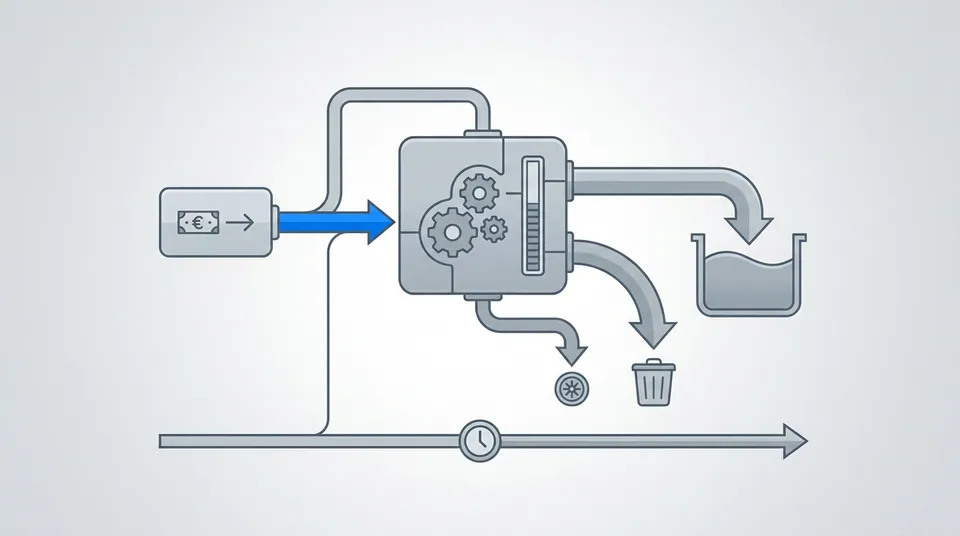
Calculating Subscriber LTV requires looking beyond simple gross sales. To get a precise, actionable figure, you must factor in average monthly revenue, subscriber churn rates, and list maintenance overhead.
The Standard Subscriber LTV Formula
The most straightforward way to calculate LTV across your active subscriber base is:
Subscriber LTV = (Average Revenue Per Subscriber Per Month) × (Average Subscriber Lifespan in Months)Where:
- Average Revenue Per Subscriber Per Month (ARPU): Total Monthly Email-Attributed Revenue divided by Total Active Subscribers.
- Average Subscriber Lifespan:
1 / Monthly Churn Rate. (Monthly Churn Rate = Unsubscribes + Hard Bounces + Permanent Inactives divided by Starting List Size).
For example, if your email program generates $12,000 per month from 20,000 active subscribers, your monthly ARPU is $0.60. If your monthly list churn rate (unsubscribes + hard bounces + unengaged drop-off) is 3.5%, the average subscriber lifespan is 1 / 0.035 = 28.5 months.
LTV = $0.60 × 28.5 months = $17.10 per subscriberThe Advanced Multi-Variable LTV Model
For growing ecommerce brands, SaaS companies, and content creators, calculating LTV with a single average rate can hide major cohort differences. An advanced model breaks down revenue and churn across specific acquisition channels:
Cohort LTV = [(Direct Revenue + Secondary Attribution) - CAC - Operational Sending Costs] / Cohort Subscriber CountTo see how subscriber lifespan directly dictates long-term value, consider this cohort comparison:
| Cohort Metric | Low-Hygiene List Cohort | High-Engagement List Cohort | | :--- | :--- | :--- | | Initial Subscriber Count | 10,000 | 10,000 | | Monthly Email Revenue | $4,000 ($0.40 ARPU) | $7,000 ($0.70 ARPU) | | Monthly Churn Rate | 6.5% (High bounce & spam rate) | 2.5% (Clean list & targeted sends) | | Average Lifespan | 15.38 Months | 40.0 Months | | Gross Subscriber LTV | $6.15 | $28.00 | | Net 3-Year Value | $61,500 | $280,000 |
As demonstrated above, decreasing monthly churn from 6.5% to 2.5%—while improving relevancy to boost ARPU from $0.40 to $0.70—more than quadruples the long-term enterprise value of the list.
For a broader look at calculating email contribution margins and campaign yield, explore our comprehensive Email Marketing ROI Guide and our guide to Email Marketing Analytics.
Key Drivers of Subscriber LTV Optimization
Optimizing Subscriber LTV isn't about one magic bullet; it's a holistic strategy focusing on improving every touchpoint of the subscriber journey.
1. Acquisition Quality & Consent Management
Poor acquisition leads to low LTV. Subscribers acquired through questionable tactics (e.g., purchased lists, pre-checked boxes) often churn quickly or mark emails as spam, dragging down deliverability and LTV. Prioritize:
- Clear Value Proposition: Ensure subscribers know exactly what they're signing up for, making your offer irresistible and relevant to their needs. A clear promise upfront reduces post-signup disappointment and enhances long-term engagement.
- Transparent Opt-in: Use clear, unambiguous opt-in forms. Double Opt-In (DOI) processes, while adding a small friction point, dramatically improve consent quality and LTV. This ensures subscribers genuinely want to hear from you, leading to higher open rates and fewer complaints.
- Reputable Sources: Focus on organic growth, content upgrades, and ethical lead magnets. Avoid buying lists or scraping emails, as these practices almost always result in poor engagement, high bounce rates, and damage to your sender reputation, ultimately crippling LTV.
2. Onboarding & Welcome Series Optimization
The welcome series is your first, best chance to engage new subscribers and set expectations. A high-performing welcome flow:
- Delivers Immediate Value: Provide the promised lead magnet, exclusive content, or discount instantly. Delayed gratification can lead to early disengagement.
- Introduces Your Brand: Share your mission, values, and what makes you unique. This helps build brand loyalty and an emotional connection from the start.
- Sets Expectations: Outline content frequency and types of emails to expect. Transparency builds trust and prevents subscribers from feeling overwhelmed or surprised by your communications.
- Encourages Interaction: Ask questions, drive to social media, or prompt a first purchase. This early engagement is critical for LTV, signaling to ESPs that your emails are valued and encouraging deeper interaction with your brand. Consider offering a small, exclusive discount for their first purchase.
3. Engagement-Based Segmentation & Personalization
Sending generic emails to an entire list is a fast track to low LTV. Personalization and segmentation are paramount:
- Behavioral Segmentation: Group subscribers based on their actions (website visits, purchase history, email clicks). Sendgrove's segmentation tools allow for dynamic lists that update in real-time based on these behaviors, enabling hyper-targeted campaigns. For instance, segment users who viewed a product but didn't buy, or those who frequently read blog posts on a specific topic.
- Demographic & Psychographic Segmentation: Use available data to tailor content to specific audience groups, addressing their unique needs and interests. This could involve age, location, job role, or even their preferred content format.
- Content Preferences: Allow subscribers to choose the types of content they wish to receive. A preference center empowers subscribers and reduces the likelihood of unsubscribes due to irrelevant content.
- Dynamic Content Insertion: Beyond basic personalization, use dynamic content blocks to show products, offers, or articles most relevant to each subscriber's profile or recent activity, further increasing engagement and conversion potential.
Learn more about how to effectively segment your email lists by engagement in our dedicated guide: How to Segment Email Lists by Engagement.
4. Automated Re-engagement & Win-Back Flows
Subscriber engagement naturally wanes over time. Automated workflows can proactively identify and re-engage dormant subscribers:
- Identify Disengagement: Use metrics like open rates, click rates, and website activity to flag inactive subscribers. Set clear thresholds for what constitutes 'inactive' within your specific audience context.
- Multi-Channel Re-engagement: Combine email with SMS, push notifications, or social media ads to reignite interest. A coordinated effort across channels can be far more effective than relying solely on email.
- Incentivize Re-engagement: Offer exclusive content, discounts, or surveys to bring subscribers back into the fold. A simple 'we miss you' message with a special offer can often revive interest.
For those who remain unengaged after re-engagement efforts, consider a subscriber sunset policy to preserve list quality and deliverability.
5. Email Deliverability & List Hygiene
Even the best content won't generate LTV if it doesn't reach the inbox. Proactive deliverability management is crucial:
- Email Validation: Use a real-time email validation service to prevent bad addresses from entering your list. This reduces bounce rates, protects sender reputation, and ensures your emails reach genuine subscribers. High bounce rates significantly depress LTV.
- Sender Reputation Management: Monitor your sender score, IP reputation, and domain health. Avoid spam traps and blacklists.
- Consistent List Cleaning: Regularly remove unengaged subscribers, hard bounces, and known spam traps from your active lists. While seemingly counter-intuitive, a smaller, highly engaged list almost always yields higher LTV than a large, stagnant one. Our guide on Email List Decay provides more insights into why this is critical.
6. Value-Driven Content & Offer Strategy
Ultimately, subscribers stay and spend when they perceive consistent value. Your content and offer strategy must be designed to nurture this value:
- Educational Content: Provide valuable insights, tips, and resources that solve your audience's problems.
- Exclusive Offers: Reward loyalty with special discounts, early access, or member-only content.
- Clear Call-to-Actions (CTAs): Guide subscribers clearly to the next step, whether it's reading an article, making a purchase, or downloading a resource.
Future-Proofing Subscriber LTV: The Sendgrove Advantage
At Sendgrove, we understand that maximizing Subscriber LTV is about more than just sending emails. It’s about building lasting relationships, ensuring deliverability, and leveraging automation to scale your impact.
Our integrated platform combines robust email marketing tools with essential features like:
- Real-time Email Validation: Automatically verify new subscribers and clean existing lists, ensuring every send reaches a genuine inbox. This directly impacts your LTV by reducing wasted sends and protecting your sender reputation.
- Advanced Segmentation: Dynamically segment your audience based on engagement, purchase history, and custom data points to deliver highly personalized campaigns.
- Intuitive Automation: Design sophisticated customer journeys that nurture leads, re-engage dormant subscribers, and drive repeat purchases, all contributing to a higher LTV.
Ready to transform your email list into a predictable, high-value asset? Explore Sendgrove's features and pricing to see how we can help you build and maintain a thriving, profitable subscriber base.
Conclusion: Elevating Your Email Strategy with Subscriber LTV
Subscriber Lifetime Value is more than just a metric; it's a strategic lens through which to view your entire email marketing operation. By understanding and actively optimizing for LTV, you transform your email list from a fleeting communication channel into a durable, compounding revenue engine. This holistic approach, encompassing everything from high-quality acquisition and engaging onboarding to smart segmentation, automated re-engagement, and vigilant deliverability, ensures that every subscriber interaction contributes to long-term profitability.
Embrace Subscriber LTV as your North Star, and you'll not only achieve superior ROI but also build a more resilient, engaged, and valuable email audience for years to come.
Common Mistakes to Avoid When Optimizing Subscriber LTV
While the path to optimizing Subscriber LTV seems straightforward, many marketers fall into common pitfalls that can undermine their efforts. Being aware of these can save you significant time and resources.
1. Focusing Solely on Acquisition without Retention
One of the biggest mistakes is to pour all resources into acquiring new subscribers without an equally robust strategy for retaining and engaging existing ones. A high churn rate will quickly negate any gains from increased acquisition. Remember, it's often significantly cheaper to retain an existing subscriber than to acquire a new one. Prioritize customer experience and continuous value delivery to foster loyalty.
2. Neglecting List Hygiene and Email Validation
Allowing your email list to accumulate invalid or unengaged addresses is a silent killer of LTV. Sending to bad addresses increases bounce rates, damages your sender reputation, and leads to lower deliverability across your entire list. This means even your engaged subscribers might miss out on your valuable content. Regular email validation and list cleaning are non-negotiable for maintaining a healthy and profitable email program.
3. Ignoring Segmentation and Personalization Opportunities
Treating your entire subscriber base as a single entity and sending generic broadcasts is a sure way to drive down engagement and LTV. Subscribers expect relevant content tailored to their interests and behaviors. Failing to segment and personalize means missed opportunities for higher conversions, deeper engagement, and ultimately, a more valuable subscriber base. Utilize all available data to create targeted experiences.
4. Overlooking the Welcome Series' Importance
The welcome series sets the tone for your relationship with a new subscriber. A weak or non-existent welcome series can lead to immediate disengagement and a lost opportunity to convert a new lead into a loyal brand advocate. Ensure your welcome sequence is value-driven, introduces your brand effectively, and guides the subscriber towards their next logical step, whether it's a purchase, content consumption, or further engagement.
5. Failure to Track and Analyze LTV Correctly
Simply calculating LTV once and forgetting about it is insufficient. It’s a dynamic metric that needs continuous monitoring and analysis. Incorrect calculation methods (e.g., conflating CLV with Subscriber LTV, or ignoring churn), or a lack of consistent tracking, can lead to misinformed strategic decisions. Ensure your analytics setup accurately attributes revenue to email efforts and tracks key metrics that influence LTV.
Avoiding these common missteps will help you build a more robust, profitable, and sustainable email marketing strategy, ensuring that your Subscriber Lifetime Value continues to grow.
FAQ
What is a good Subscriber LTV?
A good Subscriber LTV is highly industry-dependent. For some, $10 might be excellent, while for others, $100 is the baseline. Focus on the trend: if your LTV is consistently increasing due to better engagement, retention, and higher ARPU, you're on the right track. Benchmark against your own historical data and closest competitors.
How does email validation impact LTV?
Email validation directly improves LTV by reducing bounce rates, preserving sender reputation, and ensuring emails reach active, engaged subscribers. Fewer bounces mean more messages delivered, leading to higher engagement, better conversions, and a longer average subscriber lifespan—all critical components of a healthy LTV. It also minimizes wasted spend on sending to invalid addresses.
Can segmentation increase Subscriber LTV?
Yes, absolutely. Segmentation allows you to send highly relevant, personalized content and offers to specific groups of subscribers based on their behavior, demographics, or preferences. This relevance drives higher engagement, reduces unsubscribes, and encourages more frequent or higher-value purchases, thereby significantly boosting LTV. Generic sends dilute value, while segmented sends amplify it.
What is the difference between CLV and LTV in email marketing?
CLV (Customer Lifetime Value) typically refers to the total revenue a paying customer generates for your business. Subscriber LTV, on the other hand, measures the total net revenue an email subscriber generates from their subscription. Subscriber LTV can include revenue from referrals, engagement, or eventual purchases, even if they aren't yet a paying customer.
How often should I re-calculate Subscriber LTV?
It's recommended to re-calculate Subscriber LTV quarterly or bi-annually to monitor trends and evaluate the effectiveness of your optimization strategies. For businesses with significant seasonal fluctuations or rapid changes in their subscriber base, monthly recalculations might be more appropriate. Consistency in your calculation methodology is more important than frequency alone.