Blog
B2B SaaS Email Newsletter Strategy: How to Turn Subscribers into Qualified Pipeline
Master B2B SaaS email newsletter strategy with Sendgrove. Drive qualified leads, optimize deliverability, and segment audiences for maximum ROI.
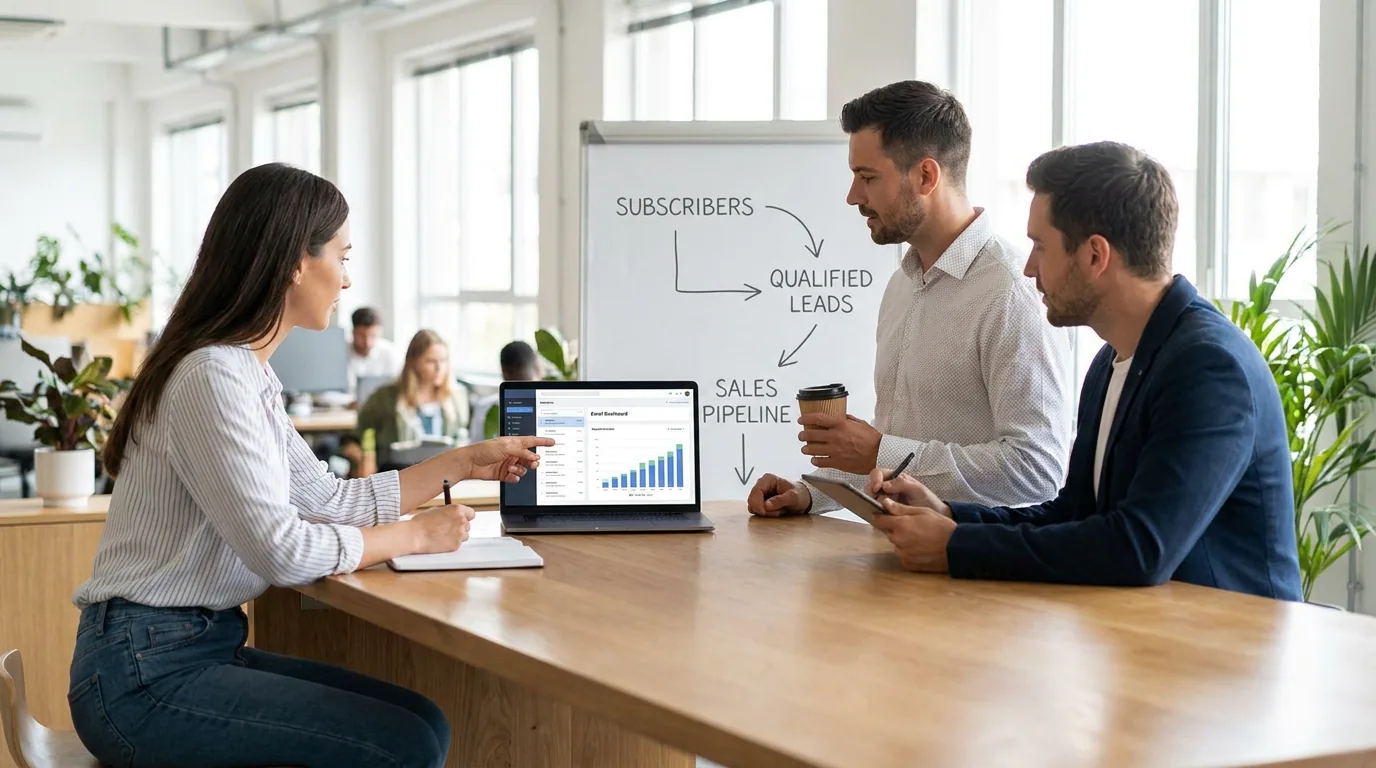
> TL;DR: A successful b2b saas email newsletter strategy transforms passive subscribers into sales-qualified pipeline by focusing on high-value industry insights, rigorous audience segmentation, and deliverability-safe sending practices. Learn how to construct an automated content engine, maintain clean subscriber lists, and bridge newsletter engagement directly to revenue using Sendgrove.
B2B SaaS companies frequently treat newsletters as low-priority broadcasts or glorified company news streams. However, when architected strategically, a value-first B2B newsletter serves as one of the highest-ROI demand generation channels available, establishing category authority while systematically nurturing long-cycle buying committees.
Last updated: September 2026
The B2B SaaS Newsletter Imperative: Beyond the Generic Company Digest

Most B2B SaaS newsletters fail for a simple reason: they are built around what the company wants to say rather than what the target buyer needs to learn. Traditional corporate digests filled with product update announcements, awards, and press release recaps yield declining open rates and high unsubscribe volumes. Decision-makers and technical buyers guard their inboxes fiercely, meaning every email must deliver immediate, standalone utility to justify its place in the inbox.
To turn newsletter subscribers into qualified pipeline, software companies must pivot from product-centric ego broadcasting to editorial-grade education. A high-performing B2B SaaS newsletter operates like a targeted trade publication. It addresses the daily operational headaches, strategic decisions, and industry shifts that keep your Ideal Customer Profile (ICP) awake at night. This approach is key to an effective b2b saas content strategy.
The Pipeline Mechanics: Shifting from Engagement to Revenue
A newsletter creates sales pipeline by shortening the trust-building lifecycle required in complex B2B purchasing decisions. Unlike B2C transactions, which often have different email marketing considerations learn more about B2B vs B2C email marketing here, B2B SaaS sales cycles often span three to twelve months and involve multiple stakeholders across finance, operations, security, and executive leadership.
When a potential buyer subscribes to your newsletter, they enter a warm nurturing environment. Rather than aggressive cold outreach, consistent value delivery builds cumulative brand affinity. When that subscriber eventually experiences the specific operational pain your software solves, your company is already positioned as the authoritative subject-matter expert. This is critical for successful saas lead generation email efforts.
By embedding contextual solution entry points within your high-value educational content, you allow engaged readers to self-identify when they are ready for a commercial conversation. Utilizing Sendgrove's email marketing platform, revenue teams can deliver responsive, highly polished campaign layouts that render flawlessly across all desktop and mobile email clients while maintaining strict deliverability standards. This includes powerful b2b email marketing automation features to streamline nurturing.
Strategic Foundation: Deliverability First
No newsletter strategy can generate pipeline if messages land in the spam folder or promotions tab. B2B email gateways employ sophisticated filtering algorithms that evaluate domain reputation, sender history, authentication protocols, and list health. Ensuring robust email deliverability for b2b is paramount.
Before scaling content production, B2B SaaS marketing teams must establish robust technical authentication—including SPF (Sender Policy Framework), DKIM (DomainKeys Identified Mail), and DMARC (Domain-based Message Authentication, Reporting, and Conformance). Furthermore, maintaining list hygiene through continuous verification prevents hard bounces and spam complaints from eroding your sending reputation over time.
Architectural Blueprint: Positioning, Audience Segmentation, and Cadence

Building a scalable B2B SaaS newsletter begins with defining a clear positioning framework. A generic newsletter targeting "marketing professionals" or "software engineers" lacks the specificity needed to resonate deeply. To drive meaningful engagement, your editorial positioning must focus on a precise intersection between your product's domain expertise and your ICP's core business objectives. This is a core component of your overall b2b saas content strategy.
Defining Your Target Audience and Persona Roles
In B2B software purchasing, buying decisions are rarely made by a single individual. The buying committee typically consists of three distinct persona types:
- Economic Buyers (Executives/VPs): Focused on high-level ROI, cost efficiency, risk mitigation, and strategic growth metrics. They value industry benchmark reports, strategic frameworks, and macro market analysis.
- Technical/Security Evaluators (IT/Security Leads): Focused on compliance, integration architecture, data privacy, and maintainability. They respond to technical teardowns, security checklists, and infrastructure best practices.
- End Users (Managers/Individual Contributors): Focused on daily workflow efficiency, ease of use, and immediate tactical problem-solving. They prefer step-by-step how-to guides, templates, and actionable productivity hacks.
A sophisticated newsletter strategy acknowledges these distinct perspectives. While your core edition should maintain broad appeal across your industry domain, your content engine should periodically offer targeted deep dives or segmented variations tailored to specific functional roles.
Lifecycle-Stage Segmentation
Sending identical newsletter broadcasts to every contact in your database creates friction and increases unsubscribes. A trial user evaluating your software has fundamentally different information needs than a long-term enterprise client or an unengaged cold subscriber. Understanding concepts like subscriber lifetime value optimization can further inform your segmentation strategy.
By leveraging Sendgrove's audience segmentation tools, B2B SaaS organizations can divide their subscriber base into precise behavioral and lifecycle cohorts:
| Subscriber Segment | Core Editorial Objective | Primary Content Focus | Call-to-Action Strategy | | :--- | :--- | :--- | :--- | | Prospects & Leads | Build category trust & problem awareness | Industry benchmarks, tactical teardowns | Download deep-dive whitepapers / Book a demo | | Active Trial Users | Accelerate time-to-value & adoption | Feature application guides, workflow hacks | Complete onboarding steps / Upgrade to paid | | Paying Customers | Maximize retention & account expansion | Advanced use cases, strategy teardowns | Invite team members / Explore add-on modules | | Inactive / At-Risk | Re-ignite interest & measure intent | High-impact trend reports, polls | Reactivate preferences / One-click feedback |
Sending Cadence and Optimal Timing Tactics
Determining the ideal sending frequency requires balancing consistent reader mindshare against editorial resources and list fatigue. For most B2B SaaS companies, three primary cadence models exist:
- Weekly Cadence: Ideal for fast-moving industries (such as cybersecurity, AI, or fintech) where fresh market developments or rapid tactics occur continuously. Requires a dedicated content team to maintain quality.
- Bi-Weekly Cadence: The sweet spot for medium-sized B2B marketing teams. Provides adequate time to produce deeply researched, original content without overwhelming subscribers' inboxes.
- Monthly Cadence: Best suited for high-level executive summaries, comprehensive original research studies, or resource-constrained teams. However, monthly cadence risks lower brand recall between touchpoints.
Regarding send timing, B2B email engagement heavily favors midweek business hours. Quantitative data across B2B software campaigns shows peak open and click-through rates generally occur between Tuesday and Thursday, from 9:00 AM to 11:30 AM in the recipient's local time zone. Avoiding Monday morning inbox cleanups and Friday afternoon sign-offs helps ensure maximum visibility.
Content Engine & Formats That Convert B2B Readers into MQLs
To reliably turn newsletter readers into Marketing Qualified Leads (MQLs) and sales pipeline, your content production process cannot rely on last-minute brainstorming. Establishing repeatable, high-converting content archetypes streamlines creation while building familiar reading habits for your audience. This fuels effective saas lead generation email strategies.
5 High-Converting B2B Newsletter Content Frameworks
Top-performing B2B SaaS newsletters regularly rotate between five core content frameworks, each designed to serve a specific step in the buying committee's trust-building journey:
#### 1. The Tactical Teardown Analyze a real-world company, workflow, or campaign to break down exactly why it succeeded or failed. Step-by-step tear downs provide immediate practical value that readers can replicate in their own organizations.
Example Structure:
- Problem statement & context (Why this teardown matters)
- The core breakdown (Annotated screenshots, flowcharts, or process metrics)
- 3 key takeaways for the reader's team
- How [Company Product] automates or solves this exact challenge
#### 2. The Curated Industry Data & Benchmark Analysis Transform raw industry statistics, original survey responses, or platform data into actionable executive insights. B2B decision-makers rely on benchmark data to justify budget allocations and validate strategic decisions to board members.
#### 3. The Product-Led Problem Solver Address a common operational headache using educational prose first, followed by an elegant demonstration of how your software handles the edge cases. This framework bridges the gap between pure education and product demonstration.
#### 4. The Expert / Founder Opinion Essay Deliver strong, defensible takes on industry shifts, emerging technologies, or changing regulatory landscapes. B2B buyers purchase from category leaders who possess clear vision and domain authority.
#### 5. The Counter-Intuitive Framework / Myth-Bust Challenge prevailing industry wisdom by exposing common practices that generate hidden costs or poor business outcomes. Myth-busting content generates high engagement, social sharing, and internal forward rates among peer teams. This is a crucial element of a strong b2b saas content strategy.
Balancing Education with Product Promotion (The 80/20 Rule)
A common mistake in B2B newsletter writing is embedding aggressive product pitches throughout every paragraph. Conversely, withholding your product entirely leaves commercial opportunities on the table.
Adhere to the 80/20 Editorial Rule: 80% of your newsletter's real estate must consist of standalone, actionable educational value that requires zero purchase commitment. The remaining 20% should focus on contextual solution bridges—linking your software directly to the problem described in the main body.
For example, when discussing how unverified email lists harm deliverability, explain the technical mechanisms of hard bounces and domain reputation drops first. Then, include a subtle CTA: "Want to clean your subscriber list automatically? Sendgrove's email validation tool verifies contacts in real time without interrupting your sending workflows."
Subject Line Crafting and Inbox Rendering Standards
The subject line and preview text (preheader) represent your newsletter's front door. In B2B environments, subject lines must balance curiosity with professional relevance while avoiding spam-trigger words like "FREE," "GUARANTEED," or aggressive capitalization. This contributes to better email deliverability for b2b campaigns.
Follow these rules for high-converting B2B subject lines:
- Keep character count concise: Aim for 35 to 55 characters to ensure complete rendering on mobile devices and email clients like Microsoft Outlook.
- Pair subject line and preview text intentionally: Use the preview text as a second headline that complements, rather than repeats, the subject line.
- Incorporate numbers and specificity: Subject lines featuring concrete data points or specific frameworks consistently out-perform vague promises.
- Test personal vs. company sender names: Sending from an individual leader (e.g., "Sarah at Sendgrove") often increases open rates compared to a generic brand handle.
List Acquisition, Verification, and Hygiene Infrastructure
A B2B SaaS newsletter strategy is only as strong as the underlying quality of its subscriber database. Attempting to grow your list through non-compliant scraped databases, purchased contact lists, or forced opt-in trickery leads directly to high bounce rates, spam trap hits, and severe domain reputation damage. Effective b2b email marketing automation is impossible without a clean list.
High-Intent Opt-In Channels for B2B SaaS
To attract decision-makers who actually intend to engage with your content, focus list acquisition efforts on high-intent conversion touchpoints:
- Contextual Blog Inline Forms: Embed newsletter signup blocks within relevant high-traffic blog posts, offering an extended checklist or template directly tied to the article topic.
- Interactive ROI & Benchmark Tools: Provide interactive web tools (such as cost calculators or security self-assessments) that deliver custom results via email.
- Dedicated Landing Pages: Create standalone, distraction-free landing pages highlighting recent newsletter editions, subscriber testimonials, and subscriber benefits.
- Product Onboarding Opt-Ins: Include an optional checkbox during trial account creation, allowing new users to subscribe to your strategic industry newsletter alongside product updates.
Navigating Double Opt-In (DOI) vs Single Opt-In (SOI) in B2B
Choosing between Double Opt-In (DOI) and Single Opt-In (SOI) requires evaluating regulatory compliance against list growth velocity:
- Single Opt-In (SOI): Adds subscribers immediately upon form submission. While SOI maximizes conversion speed and reduces subscription friction, it leaves your forms vulnerable to mistyped addresses, bot submissions, and malicious spam traps.
- Double Opt-In (DOI): Requires subscribers to click a confirmation link sent to their inbox before receiving content. DOI strongly ensures list intent, eliminates bot signups, and provides robust proof of consent for strict privacy regulations such as GDPR and CCPA.
In B2B contexts, double opt-in strongly ensures list hygiene and greatly reduces compliance risk. If using Single Opt-In to accelerate growth, pairing your signup forms with real-time API verification is critical to validate addresses before they enter your database. This is a crucial aspect of overall email deliverability for b2b.
Automated Real-Time Verification and Spam Trap Prevention
Invalid email addresses and role-based accounts (such as sales@, info@, or support@) degrade newsletter analytics and pose deliverability risks. Role accounts are frequently monitored by multiple staff members or configured with automated auto-responders that inflate bounce rates and skew engagement metrics.
By integrating Sendgrove's real-time email validation, software companies can automatically verify syntax, domain MX records, disposable email domains, and toxic spam traps at the exact moment of subscription. Preventing bad addresses from entering your list maintains high deliverability metrics and protects sending domain health.
Implementing an Automated Sunset Policy
List decay is a natural reality in B2B email marketing. Industry estimates suggest that B2B email lists decay by roughly 20% to 30% annually due to job changes, domain rebrands, and shifting corporate priorities.
Continuing to send newsletters to inactive subscribers signals to mailbox providers that your content is irrelevant, driving your messages toward the spam folder. To mitigate this risk, implement an Automated Sunset Workflow:
- Identify Inactive Subscribers: Define inactivity as zero opens or clicks across a 60-day or 90-day window (adjusted based on sending cadence).
- Trigger a Re-Engagement Campaign: Send a targeted 2-step re-engagement sequence offering a high-value resource or asking if they wish to adjust their preference options.
- Execute Automated Suppression: If the subscriber remains unresponsive after the re-engagement sequence, automatically suppress or unsubscribe them from master newsletter broadcasts.
Suppressing inactive contacts lowers total sending volume, reduces sending infrastructure costs, and dramatically improves open and click rates across active segments. This is another area where b2b email marketing automation can significantly impact ROI.
Advanced B2B Email Marketing Automation: Beyond the Broadcast
For B2B SaaS companies, the newsletter shouldn't be a one-way broadcast, but a sophisticated, automated journey designed to convert interest into qualified opportunities. Moving beyond simple scheduled sends unlocks the true power of b2b email marketing automation, transforming your newsletter into a dynamic engagement engine. This approach is vital for maximizing saas lead generation email effectiveness.
Lead Scoring and Behavioral Triggers
Traditional newsletters measure success by open and click rates. Advanced automation integrates lead scoring, assigning points to subscriber actions—like opening specific content, clicking on high-intent links (e.g., pricing pages, demo requests), or visiting product features. This allows your b2b email marketing automation system to identify 'hot' leads ready for sales engagement.
Automated workflows can then trigger specific actions:
- High Score Threshold: Automatically add a subscriber to a sales-assisted nurturing sequence or notify an Account Executive to reach out.
- Content Consumption Patterns: If a subscriber consistently engages with content about a specific feature or problem, automatically enroll them in a deep-dive email course on that topic.
- Website Activity: Integrate your newsletter platform with website tracking to trigger re-engagement emails when a subscriber visits your site but doesn't convert.
Multi-Channel Nurturing with Newsletter Content
Your newsletter content isn't just for email. Repurpose it across multiple channels for a cohesive b2b saas content strategy:
- Social Media Amplification: Automate sharing of key newsletter articles or insights on LinkedIn, X (formerly Twitter), and other B2B platforms.
- Personalized Website Content: Use content from newsletters to personalize website experiences for returning visitors, showing them more relevant blog posts or product information.
- Webinar/Event Invitations: Automatically invite engaged newsletter subscribers to webinars or virtual events based on their expressed interests.
Re-Engagement and Win-Back Automation
Inactive subscribers are not lost causes. Automated re-engagement campaigns are crucial. If a subscriber hasn't opened or clicked in 60-90 days, trigger a sequence:
- "We Miss You" Email: A lighthearted email reminding them of the value they're missing.
- Best-Of Content Roundup: A digest of your most popular or highest-performing newsletter articles.
- Preference Center Update: Prompt them to update their subscription preferences, offering options for less frequent sends or different content topics.
- Final Goodbye (with an offer): A last-ditch effort, often with a special offer or exclusive content, before suppressing them from future sends to protect your email deliverability for b2b.
These automated sequences not only recapture interest but also help maintain list hygiene, ensuring your overall b2b email marketing automation efforts are effective and compliant.
A/B Testing and Continuous Optimization
Optimization is an ongoing process. Your b2b saas email newsletter strategy should include continuous A/B testing for:
- Subject Lines & Preheaders: Test different hooks, emojis, and personalization elements.
- Call-to-Action (CTA) Buttons: Vary text, color, and placement.
- Content Formats: Compare the performance of long-form articles vs. short, punchy insights.
- Send Times & Days: Identify peak engagement periods for your specific audience segments.
- Personalization: Test the impact of dynamic content blocks based on subscriber data.
By systematically testing and refining each element, you continuously improve the effectiveness of your newsletter in driving saas lead generation email results and overall pipeline growth. This iterative process is a cornerstone of a data-driven b2b saas content strategy.
FAQ
What is the primary goal of a B2B SaaS email newsletter?
The primary goal is to nurture subscribers into sales-qualified leads and ultimately pipeline, by establishing thought leadership, delivering consistent value, and building trust over the long B2B sales cycle. It's about educating buyers, not just broadcasting product news. Effective saas lead generation email strategies rely on this foundation.
How often should a B2B SaaS company send its newsletter?
Most B2B SaaS companies find success with a bi-weekly cadence. This allows enough time to produce high-quality, deeply researched content without overwhelming subscribers. Weekly is suitable for fast-moving industries, while monthly can be too infrequent for strong brand recall.
What kind of content works best in a B2B SaaS newsletter?
High-converting content frameworks include tactical teardowns, curated industry data/benchmarks, product-led problem solvers, expert opinion essays, and myth-busting articles. The focus should always be on providing standalone, actionable utility relevant to the target audience's business challenges. This aligns with a strong b2b saas content strategy.
Why is deliverability crucial for a B2B SaaS newsletter?
Deliverability is crucial because even the best content generates zero ROI if it lands in the spam folder. Maintaining strong sender reputation through technical authentication (SPF, DKIM, DMARC), list hygiene (verification), and engagement management ensures your valuable content reaches the inbox. This directly impacts the success of any email deliverability for b2b program.
How does audience segmentation improve newsletter performance?
Audience segmentation allows B2B SaaS companies to tailor content to specific subscriber segments (e.g., prospects, trial users, customers) based on their lifecycle stage and information needs. This increases relevance, boosts engagement rates, and reduces unsubscribes by delivering the right message to the right person.
What is an automated sunset policy and why is it important?
An automated sunset policy is a workflow to identify and suppress inactive subscribers who haven't engaged with your newsletter over a defined period (e.g., 60-90 days). It's important because list decay is natural, and sending to disengaged contacts signals to mailbox providers that your content is irrelevant, harming your sender reputation and deliverability.
How can Sendgrove help with B2B SaaS email newsletter strategy?
Sendgrove provides an all-in-one platform for B2B SaaS companies, offering robust email marketing tools for campaigns, advanced audience segmentation, powerful marketing automation for nurture sequences, and built-in real-time email validation to maintain list hygiene and protect sender reputation, ensuring your strategic newsletters land in the inbox and convert leads.